
Killeen Mold Remediation
Unresolved indoor leaks trigger rapid capillary spread within hours, accelerating mold formation and framing decay throughout hidden structural cavities. Basement floodwater triggers active mold colonization and structural risk within 24 to 48 hours if materials remain saturated. Our certified specialists establish immediate isolation barriers to safeguard your property and restore healthy indoor air quality.
Targeted Spore Containment And Structural Drying
Central Texas summer heat combined with humid, stagnant indoor air enables dormant mold spores on damp gypsum board to establish visible colonies in under forty-eight hours.
About 39% of local housing units (25,009 of 63,801) were built since 2000, so a substantial share of the local stock is still on its original systems.
The median owner-occupied home across the community was built in 1994 (Census ACS 5-year).
A pattern echoed in public discussions is that homeowners attempting DIY floodwater cleanup with household fans often experience rapid mold blooms behind baseboards and drywall because moisture remains trapped inside wall cavities.
Explore our complete water damage restoration services to eliminate standing moisture before colonies root deeply into framing timbers.
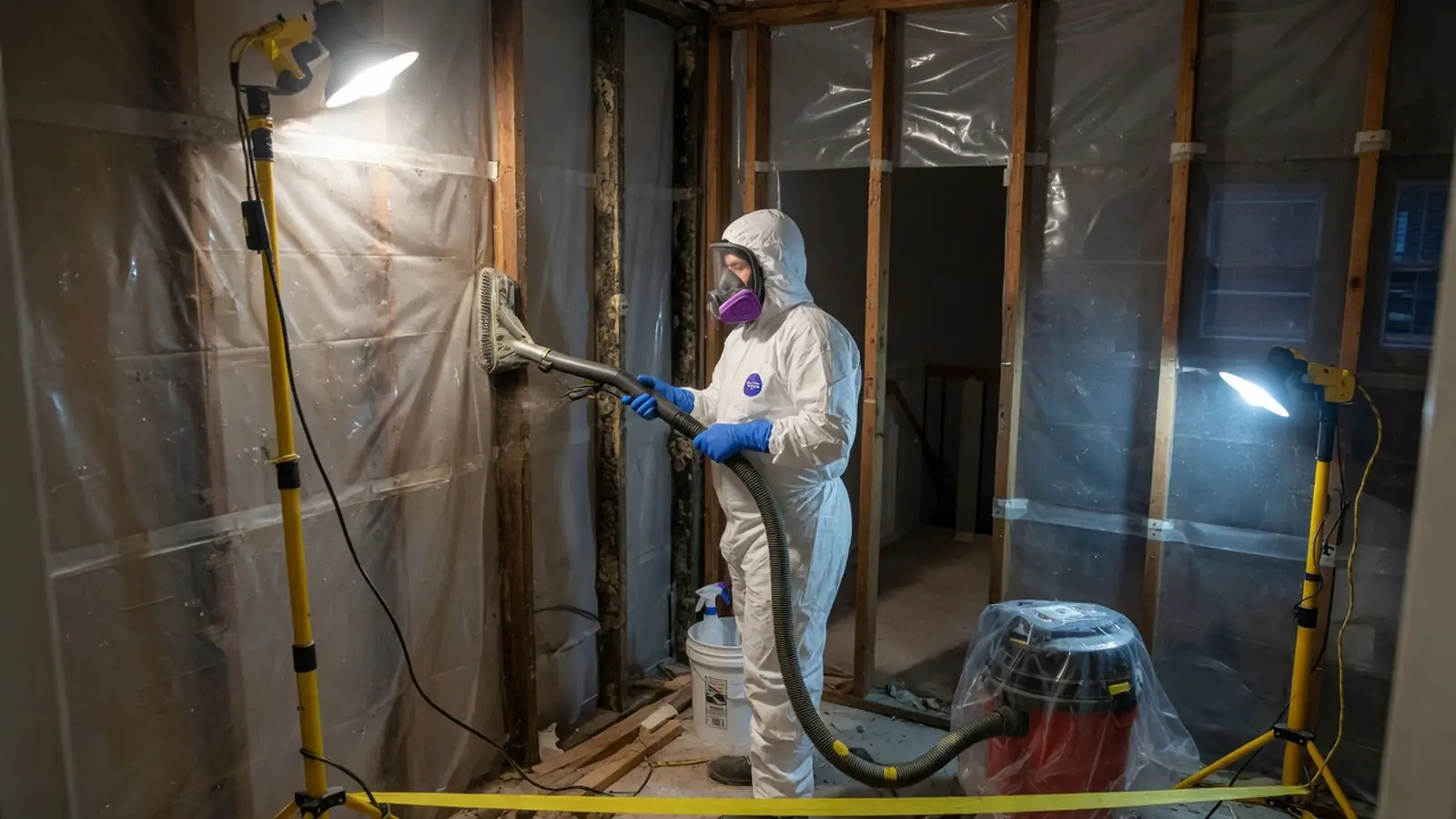
Our technicians isolate damaged wallboard under physical plastic barriers to prevent cross-contamination while sanitizing framing studs with botanical antimicrobials.
Our Four-Stage Decontamination Method
Homeowners often describe that demolishing flood-damaged drywall frequently exposes active mold colonies on framing studs, leaving homeowners unsure whether over-the-counter treatments are sufficient compared to professional remediation. If indoor plumbing fails, learn how professional flood cleanup prevents mold proliferation across structural framing.
- Moisture Mapping And Inspection. Technicians calibrate thermal imaging cameras and digital moisture meters to trace hidden dampness behind baseboards and ceiling cavities without destructive probing.
- Negative Air Containment Setup. Remediation crews establish negative air pressure containment chambers with HEPA filtration before disturbing mold, preventing viable spores from contaminating clean living areas.
- Structural Drying And Air Scrubbing. Eliminating moisture trapped in framing pockets requires combining high-capacity dehumidifiers with targeted air movers. Continuous HEPA filtration scrubs circulating air until relative humidity drops to stable equilibrium levels.
- Antimicrobial Treatment And Clearance. Treated structural timbers receive an EPA-registered fungicidal application before independent air sampling verifies baseline spore counts for complete clearance.
Certified Workmanship And Proven Containment
When severe Central Texas weather compromises roofing or exterior wall envelopes, schedule emergency storm damage restoration to secure structural drying right away. Our team operates according to strict IICRC S520 remediation standards, maintaining continuous negative pressure containment and zero shortcuts until third-party clearance testing confirms your home is safe.
Crawl Space And Basement Remediation
Basement floodwater triggers active mold colonization and structural risk within 24 to 48 hours if materials remain saturated. We deploy specialized extraction gear and rapid structural drying to eliminate subterranean moisture.
Wall Cavity Decontamination
Trapped condensation inside insulated wall assemblies feeds destructive fungal colonies out of sight. We open precision access points, capture airborne spores under negative pressure, and treat studs directly.
HVAC And Ductwork Sanitization
Spreading microbial growth inside air handlers contaminates living zones every time ventilation cycles activate. We thoroughly clean duct interiors and sanitize surfaces to stop recirculating spore clusters.
Our Approach To Structural Remediation
Every remediation project follows certified containment standards designed to protect indoor air quality and preserve structural integrity through thorough moisture elimination.
- 10Zip Codes Served
- 8Service Areas
- 3Services Offered
Local property owners rely on our certified remediation practices to eliminate active microbial growth safely and permanently. Read what neighbors say about our transparent communication and clean workmanship.
“Our clearance inspection passed without a single hitch after the crew finished treating the framing inside our utility room. They handled every required protocol and air sampling test accurately the first time through. We had our official documentation in hand before the remodelers arrived.”
Marcus T.
“Late on a Sunday evening, we noticed dark growth spreading rapidly beneath our laundry subfloor. The team answered our call immediately, arrived with containment plastic within two hours, and kept the spores from spreading while answering all our questions. Having that level of weekend responsiveness saved our home from severe damage.”
Elena R.
“The clean edge cuts along the bottom of the drywall line were remarkably level and precise. The crew sealed the containment barriers with airtight seams and wiped every framing pocket spotless before applying antimicrobial sealant. You could tell they took pride in leaving the treated studs completely clean.”
David B.
“I already sent my next-door neighbor their contact info after seeing how thoroughly they cleared out our master bathroom closet. They showed up on schedule, explained the drying numbers every morning, and never tried to upsell unnecessary work. My neighbor hired them two days later for a crawl space issue.”
Sandra K.
Frequently Asked Questions
Why is applying household bleach to porous drywall insufficient for eliminating active indoor mold colonies?
Bleach cannot eliminate mold on porous drywall because chlorine evaporates on the surface while water soaks in, feeding deep roots. Chlorine molecules cannot penetrate porous gypsum, leaving the underlying hyphae intact while surface moisture accelerates subsequent regrowth.
How quickly does mold develop after indoor flooding?
Active mold colonies begin colonizing saturated drywall and wood framing within 24 to 48 hours of initial floodwater exposure. Basement floodwater triggers active mold colonization and structural risk within 24 to 48 hours if materials remain saturated, requiring swift extraction and structural dehumidification.
What factors determine the cost of professional mold remediation?
Remediation costs depend on the square footage of contamination, containment barriers required, structural drying needs, and clearance testing. Extensive moisture pockets trapped inside wall cavities require high-capacity dehumidification equipment and specialized HEPA filtration chambers, impacting overall project scope.
How do technicians prevent mold spores from spreading during removal?
Crews establish negative air pressure containment chambers with HEPA filtration before disturbing materials, trapping all airborne spores. Remediation crews establish negative air pressure containment chambers with HEPA filtration before disturbing mold, preventing viable spores from contaminating clean living areas.
Does moldy drywall always need to be removed completely?
Porous drywall with visible fungal growth must be cut out and discarded, while solid wood framing studs can be sanitized and dried in place. Demolishing flood-damaged drywall frequently exposes active mold colonies on framing studs, leaving homeowners unsure whether over-the-counter treatments are sufficient compared to professional remediation.