
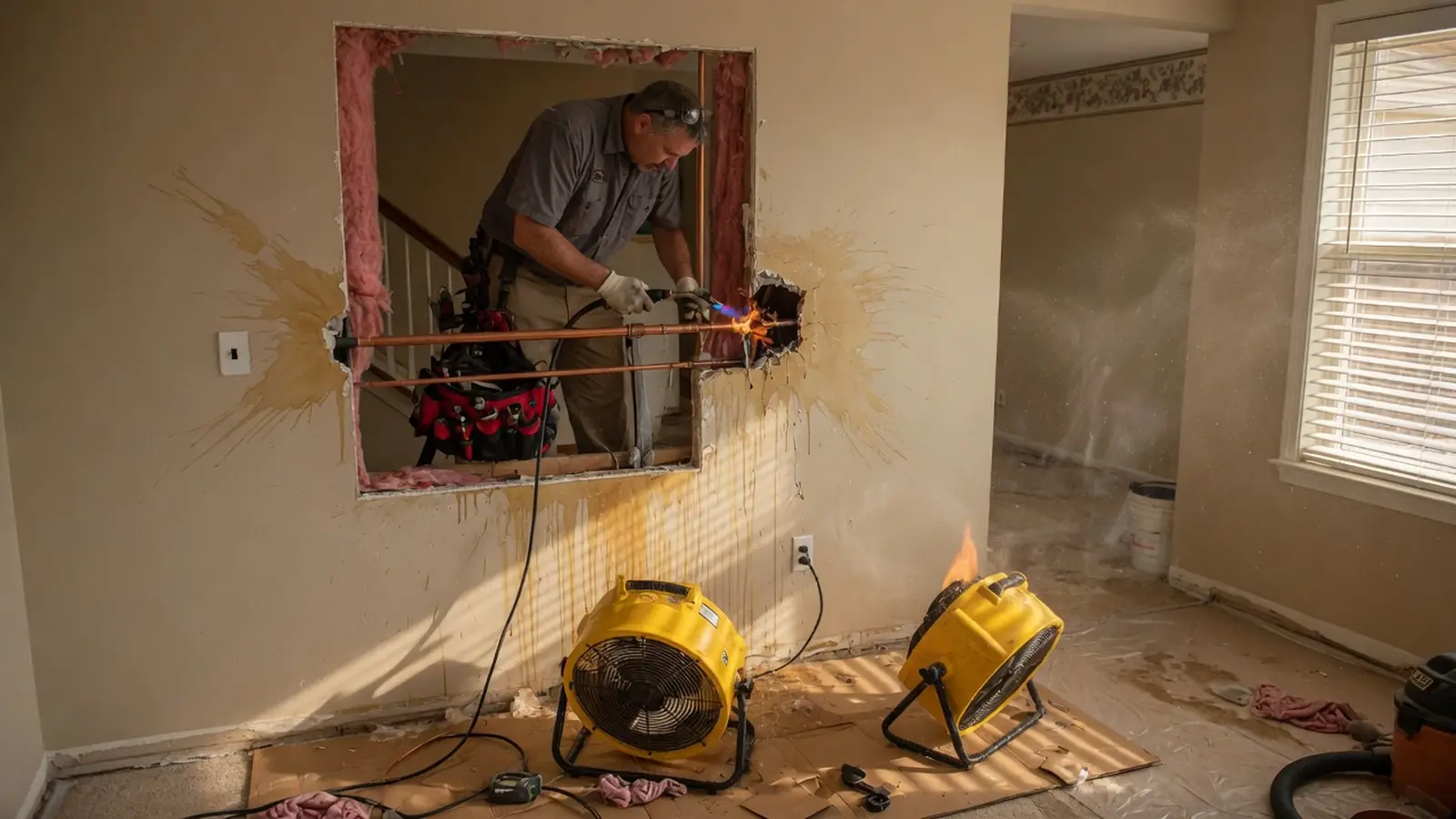
Killeen Flood Cleanup
When stormwater inundates living areas, immediate water removal and controlled dehumidification protect your home against severe structural degradation. Our technicians deploy heavy-duty extraction units and drying systems to stabilize residential interiors quickly.
Call (254) 555-0162 if it's actively dripping.
Dedicated Disaster Restoration Specialists
Our crews bring specialized extraction and dehumidification equipment directly to flood-impacted neighborhoods throughout Bell County.
Explore comprehensive water damage restoration options for residential properties facing severe surface flooding.
We recently stabilized a single-story brick home near Clear Creek after flash runoff breached the back patio door.
A pattern echoed in public discussions is that homeowners attempting DIY floodwater cleanup with household fans often experience rapid mold blooms behind baseboards and drywall because moisture remains trapped inside wall cavities.
Our technicians use penetrating moisture meters and industrial desiccant dehumidifiers to eliminate that concealed dampness completely.
How We Remediate Flooded Properties
Restoration demands rapid extraction, strict containment, and systematic dehumidification. A pattern echoed in public discussions is that flooded property owners struggle with proper flood-cut heights for saturated drywall, disposal of contaminated materials, and safe deployment of industrial drying equipment.
- Immediate Extraction And Hazard Assessment. We pump out standing floodwater using truck-mounted extractors and inspect structural perimeter boundaries. When torrential downpours breach building envelopes, evaluating severe exterior storm damage allows our crew to seal points of entry before deep interior drying begins.
- Controlled Demolition And Flood Cuts. Saturated baseboards and porous insulation are stripped away to create unimpeded airflow channels across wall framing. Technicians mark precise flood lines twelve to twenty-four inches above visible moisture to remove damp sheetrock safely.
- Framing Sanitization And Spore Elimination. Demolishing flood-damaged drywall frequently exposes active mold colonies on framing studs, leaving homeowners unsure whether over-the-counter treatments are sufficient compared to professional remediation, which is why arranging certified structural mold remediation ensures all framing studs receive commercial EPA-registered antimicrobials.
- Industrial Dehumidification And Monitoring. High-velocity air movers and low-grain refrigerant dehumidifiers circulate warm, dry air throughout the affected chambers. Daily moisture readings verify that framing lumber, subfloors, and sill plates have returned to safe dry standards.
Rigorous Containment Standards
Our team isolates affected work zones using heavy plastic sheeting and commercial HEPA air scrubbers. Homeowners often describe how inadequate containment and lack of negative air pressure during structural demolition can spread airborne mold spores and cross-contaminate unaffected living spaces, which is why our strict isolation standards protect your family.
Crawl Space Drying And Joist Stabilization
Standing crawl space moisture begins degrading wooden floor joists within days, creating structural rot long before surface signs appear. We deploy specialized crawl space fans and drying systems to preserve foundational floor supports.
Subfloor Moisture Extraction
Subfloor soft spots only become noticeable after months of concealed moisture buildup, indicating advanced underlying framing damage. Our technicians utilize deep-penetrating electronic probes to locate and dry trapped moisture under layers of flooring.
Sanitary Cleanout And Decontamination
Trapped crawl space dampness creates harborage conditions that trigger secondary termite and rodent infestations. We remove damp organic debris, treat exposed wood with botanical disinfectants, and leave your foundation clean and protected.
Our Structured Approach To Flood Mitigation
We adhere to strict IICRC drying principles, documenting every stage of moisture reduction with thermal imaging and psychrometric logs so property owners have full transparency.
- 12Zip Codes Served
- 6Service Areas
- 3Services Offered
Read honest feedback from local property owners who experienced our prompt water removal and structural drying services firsthand.
“When standing water seeped under our baseboards, the crew explained why antimicrobial floor sealant would protect our subfloor better than basic sheet plastic. Their advice prevented us from having to replace entire plywood sections later on. That practical recommendation saved us thousands on our finished repair budget.”
Marcus T.
“Another contractor offered a lowball quote but admitted he was just going to run residential fans without setting up containment barriers. The team showed us why negative pressure was essential to keep spores from traveling into our bedrooms. Seeing how thoroughly they contained the mess proved that hiring true professionals was worth every penny.”
Elena R.
“Navigating city disposal regulations for wet building insulation seemed daunting until these specialists stepped in. The crew handled the mandatory documentation and disposal protocols right from the first inspection visit. Our local adjuster approved the entire cleanup invoice without a single dispute.”
David B.
“Heavy Sunday evening runoff flooded our ground-level den, but this company picked up the phone immediately. A lead technician arrived with commercial dehumidifiers within an hour and walked us through the stabilization plan. Having someone answer our call late on a weekend kept our family from panicking.”
Hannah G.
Frequently Asked Questions
Can wall-to-wall carpet and underlying padding be cleaned and disinfected after floodwater enters a home, or must they be removed?
Porous carpet padding must always be discarded after floodwater intrusion, while salvageable carpets require off-site industrial immersion cleaning. Overland flood runoff carries biological contaminants that remain trapped in foam padding, making sanitary in-place disinfection impossible.
How quickly does professional structural drying need to begin after a home floods?
Industrial drying must commence within 24 to 48 hours following water intrusion to halt microbial propagation and prevent permanent wood rot. Rapid extraction and continuous high-velocity air movement lower relative humidity below sixty percent, preventing secondary condensation across ceilings.
What determines the proper flood-cut height when removing saturated drywall?
Drywall flood cuts should be made twelve to twenty-four inches above the highest continuous moisture mark detected by calibrated penetrating meters. This standard clearance exposes wet framing studs, accelerates cavity ventilation, and ensures all concealed microbial growth is fully treated.
How long does the structural flood cleanup and drying process usually take?
Complete flood cleanup and structural drying typically takes three to five days depending on building materials and moisture saturation levels. Daily psychrometric readings track moisture removal from subflooring and framing until structural materials reach their regional equilibrium targets.
Will standard homeowners insurance policies cover professional flood cleanup services?
Standard homeowners policies typically exclude overland flooding, requiring dedicated flood insurance policies through the NFIP or private riders. Our specialists provide complete itemized line-item documentation and moisture maps to streamline claims processing with your insurance adjuster.