
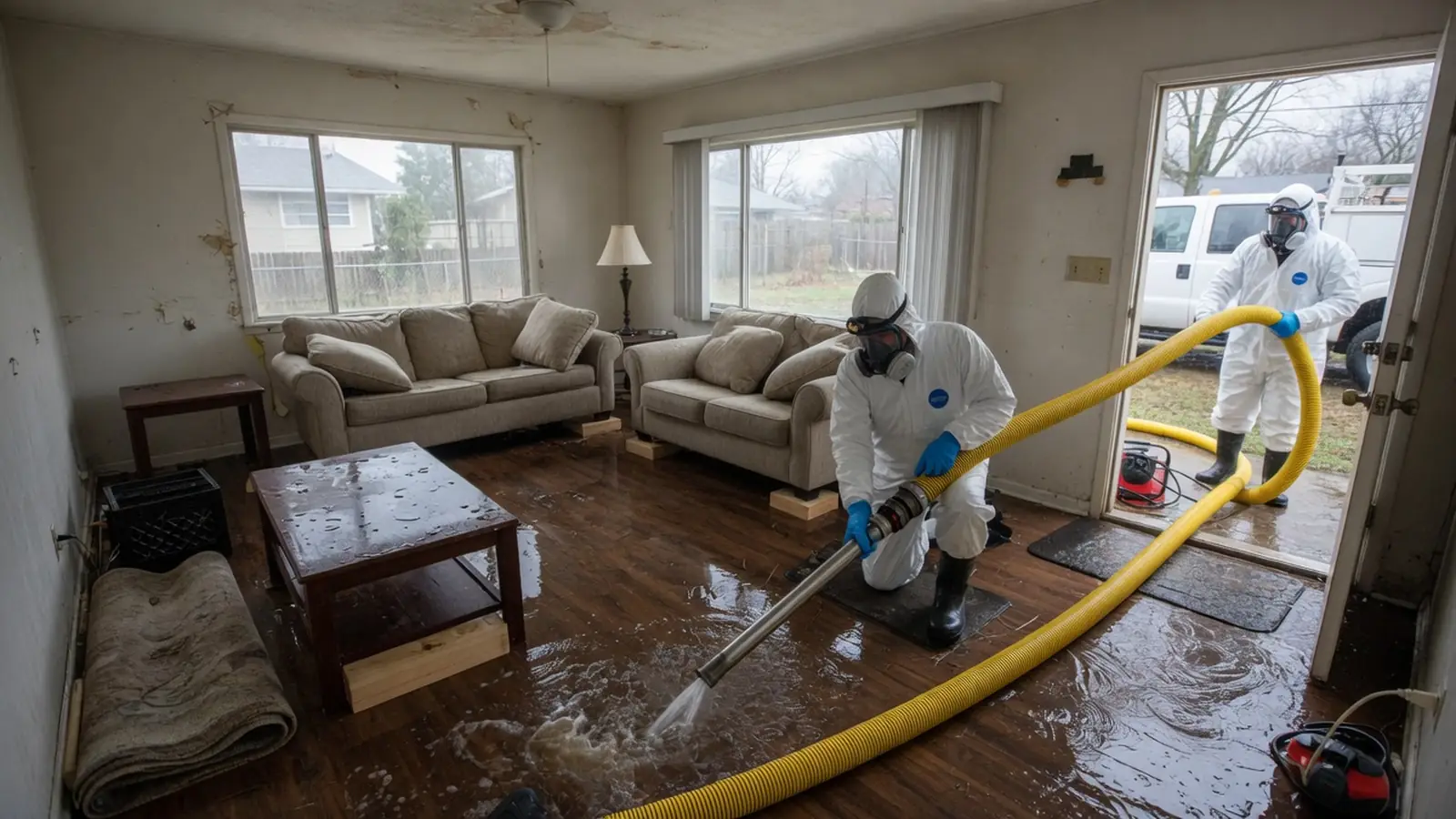
Water Damage Restoration Killeen TX
When sudden indoor flooding strikes, our certified technicians mobilize immediately to extract standing water and halt structural deterioration. Homeowners facing sudden indoor flooding from frozen burst plumbing lines are uncertain about insurance claim deductibles and coverage for emergency dry-out mitigation, which is why our team documents every step of the restoration from the very first hour.
Ceiling dripping now? Call (254) 555-0162.
Affordable Water Damage Repair And Drying
Our certified technicians specialize in rapid water extraction, structural cavity drying, and psychrometric moisture monitoring.
About 5% of housing units in the local area (2,962 of 63,801) were built before 1960, the era of galvanized steel supply lines and cast iron drains.
About 8% of housing units in the local area (4,827 of 63,801) were built in the 1960s, overlapping the years aluminium branch wiring was installed.
About 30% of housing units in the region (19,316 of 63,801) were built in the 1970s and 1980s, overlapping the years polybutylene supply piping was commonly installed.
About 42% of housing units in the territory (27,105 of 63,801) were built before 1980, the period when asbestos-containing materials and lead paint were still in use.
The dominant mapped soils across the territory (TX027) by acreage are Houston Black clay, 1 to 3 percent slopes; Denton silty clay, 1 to 3 percent slopes; Speck association, 1 to 8 percent slopes; Heiden clay, 1 to 3 percent slopes.
The single most extensive soil unit mapped around the area is Houston Black clay, 1 to 3 percent slopes, covering about 55,019 acres of TX027.
A pattern echoed in public discussions is that softening drywall and dark staining around wall plumbing leave property owners uncertain whether they are facing inactive water stains or active microbial growth needing remediation.
Every project receives meticulous attention to containment barriers, negative air pressure, and calibrated moisture mapping to protect untouched living quarters.
Learn how our crew handles rapid flood cleanup when utility lines rupture or surface runoff overwhelms interior spaces.
Step-by-Step Moisture Extraction And Structural Drying
NOAA radar recorded 2,972 hail signatures within about 15 miles between 2021-2025 (2021: 264, 2022: 559, 2023: 603, 2024: 807, 2025: 739). The heaviest recent hail year around the area was 2024, with 807 radar hail signatures inside a 15-mile radius, leaving hidden roof punctures that our structured drying process is built to resolve.
- Envelope Stabilization And Inspection. Crews must secure structural envelope breaches with emergency tarps or board-ups before running dehumidifiers, preventing incoming rain from resetting drying cycles. Homeowners often describe how storm-driven roof water collects in attic insulation and leads to heavy, sagging drywall patches that pose structural collapse hazards inside living areas, making rapid containment vital.
- Water Extraction And Thermal Moisture Mapping. Technicians deploy submersible pumps and industrial extractors to pull pooled water from carpets, subflooring, and crawlspaces. A pattern echoed in public discussions is that ruptured water heater tanks discharge substantial volumes into utility areas, making it difficult for homeowners to detect trapped moisture absorbed into subflooring and sill plates without calibrated meters.
- Industrial Dehumidification And Air Movement. High-velocity air movers and low-grain refrigerant dehumidifiers establish balanced evaporation rates throughout all affected building assemblies. For properties facing exterior envelope failures, our emergency protocols for severe storm damage ensure wet structural framing dries thoroughly before permanent finishes are replaced.
- Moisture Verification And Final Sanitization. Daily moisture meter readings verify that wood studs, sill plates, and drywall return to dry standard baseline equilibrium. Antimicrobial botanical treatments are applied to protect building components against mold spores and lingering moisture odors.
Complete Structural Drying And Honest Communication
Our technicians adhere strictly to industry drying standards, verifying that every square foot of subfloor, sill plate, and framing meets dry equilibrium before closing out a project. We provide comprehensive daily psychrometric logs, detailed moisture maps, and direct insurance documentation so homeowners have full visibility into the mitigation process from initial extraction through final sanitization.
Emergency Water Extraction
Truck-mounted and portable extraction units remove standing water from living areas, crawlspaces, and basements within hours of line breaks or leaks. Rapid extraction relieves hydrostatic pressure and minimizes moisture migration into wall cavities.
Structural Cavity Drying
Specialized drying systems inject warm, dry air into wall assemblies, ceiling cavities, and under cabinetry without unnecessary demolition. Continuous monitoring tracks relative humidity and vapor pressure until structural materials reach baseline dry standards.
Attic And Ceiling Water Cleanup
Saturated insulation removal, controlled drywall draining, and ceiling stabilization prevent hazardous ceiling collapses after severe roof penetrations. Heavy-duty air filtration units scrub airborne particulate and control indoor humidity.
Dedicated Water Extraction And Structural Drying
Every restoration project begins with immediate containment, moisture mapping, and transparent communication. We deploy calibrated detection equipment and commercial drying systems to stabilize residential structures quickly and protect families from secondary microbial growth.
- 10Zip Codes Served
- 6Service Areas
- 3Services Offered
Real feedback from property owners who needed rapid water extraction and structural drying after line breaks, roof leaks, and appliance failures.
“Every morning started with a quick text and timestamped photos of the moisture readings across our hallway. The crew kept us updated on every drying phase without us ever having to chase anyone down. It made a stressful burst pipe situation completely manageable.”
Marcus B.
“Instead of ripping out all of our kitchen base cabinets, the technician explained how directed cavity injection drying would preserve the hardwood backing. Their detailed assessment saved us thousands in replacement materials while ensuring no trapped dampness remained behind the walls. We truly appreciated their honest breakdown of what could be saved.”
Elena R.
“Torrential downpours delayed initial roof tarping on the first afternoon, but the crew stayed late into the night setting up interior containment to keep moisture isolated. Once the exterior was sealed the next morning, they added extra dehumidifiers and brought the drying timeline right back on track. Their dedication kept our living room ceiling from collapsing.”
David P.
“Our HOA has rigid regulations regarding generator noise and work vehicles parking along the street during emergencies. The team proactively spoke with the neighborhood coordinator, positioned their exhaust baffles courteously, and kept the entire staging area immaculate. None of our neighbors had a single complaint during four full days of equipment operation.”
Sandra M.
Frequently Asked Questions
Can extraction and indoor drying start immediately after a storm, or do exterior roof repairs need to be fully finished first?
Indoor extraction begins immediately once the building envelope is stabilized with emergency tarps, before permanent roof repairs are completed. Crews must secure structural envelope breaches with emergency tarps or board-ups before running dehumidifiers, preventing incoming rain from resetting drying cycles while standing water is pumped out.
How long does the structural drying process typically take for flooded rooms?
Most residential water mitigation projects require three to five consecutive days of commercial dehumidification to reach baseline equilibrium. The exact duration depends on moisture volume, subfloor saturation, and material density, with daily moisture meter logging tracking progress.
Does homeowners insurance cover emergency water dry-out mitigation services?
Standard property insurance policies typically cover sudden and accidental water discharges, including emergency dry-out and water extraction. Homeowners facing sudden indoor flooding from frozen burst plumbing lines are uncertain about insurance claim deductibles and coverage for emergency dry-out mitigation, but mitigation technicians document moisture readings directly for adjusters.
How can property owners tell if drywall staining is active mold or an old water stain?
Calibrated moisture meters test wall dampness immediately, distinguishing active microbial growth from inactive, historic surface discoloration. Softening drywall and dark staining around wall plumbing leave property owners uncertain whether they are facing inactive water stains or active microbial growth needing remediation, making non-destructive probing essential.
What immediate steps should property owners take after a major plumbing rupture?
Shut off the main water valve immediately, switch off circuit breakers to damp rooms, and call an emergency mitigation crew for extraction. Quickly shutting off the water stops further subfloor flooding, and professional extraction equipment prevents water from wicking up wall framing and into structural sill plates.